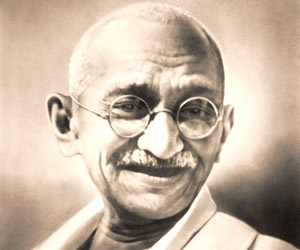
Mohandas Karamchand Gandhi

Mahatma GandhiBorn: October 2, 1869
Martyrdom: January 30, 1948.
Achievements: Known as Father of Nation; played a key role in winning freedom for India; introduced the concept of Ahimsa and Satyagraha. 

Mahatma Gandhi popularly known as Father of Nation played a stellar role in India's freedom struggle. Born in a Bania family in Kathiawar, Gujarat, his real name was Mohandas Karamchand Gandhi (M.K. Gandhi). The title Mahatma came to be associated with his name much later. Before Gandhiji's arrival on the Indian political scene, freedom struggle was limited only to the intelligentsia. Mahatma Gandhi's main contribution lay in the fact that he bridged the gulf between the intelligentsia and the masses and widened the concept of Swaraj to include almost every aspect of social and moral regeneration. Paying tribute to Mahatma Gandhi on his death, famous scientist Albert Einstein said, "Generations to come will scarce believe that such a man as this walked the earth in flesh and blood". 

Mohandas Karamchand Gandhi was born on October 2, 1869, at Porbandar, a small town on the western coast of India, which was then one of the many tiny states in Kathiawar. Gandhiji was born in middle class family of Vaishya caste. His father, Karamchand Gandhi, was a Dewan or Prime Minister of Porbandar. His mother, Putlibai, was a very religious lady and left a deep impression on Gandhiji's mind. Gandhiji was a mediocre student and was excessively shy and timid. 

Gandhiji was truthful in his conduct right from the childhood. There is a very famous incident in this regard. A British school inspector once came to Gandhiji's school and set a spelling test. Gandhiji spelled all the words correctly except kettle. The class teacher noticed the mistake and gestured Gandhiji to copy the correct spelling from the boy sitting next to him. Gandhiji refused to take the hint and was later scolded for his "stupidity". 

Gandhiji was married at the age of thirteen to Kasturbai. He was in high school at that time. Later on in his life, Gandhiji denounced the custom of child marriage and termed it as cruel. After matriculating from the high school, Gandhiji joined the Samaldas College in Bhavnagar. After the death of Gandhiji's father in 1885, a family suggested that if Gandhiji hoped to take his father's place in the state service he had better become a barrister which he could do in England in three years. Gandhi welcomed the idea but his mother was objected to the idea of going abroad. To win his mother's approval Gandhiji took a solemn vow not to touch wine, women and meat and remained true to it throughout his stay in England.

Gandhiji sailed for England on September 4, 1888. Initially he had difficulty in adjusting to English customs and weather but soon he overcame it. Gandhiji completed his Law degree in 1891 and returned to India. He decided to set up legal practice in Bombay but couldn't establish himself. Gandhiji returned to Rajkot but here also he could not make much headway. At this time Gandhiji received an offer from Dada Abdulla & Co. to proceed to South Africa on their behalf to instruct their counsel in a lawsuit. Gandhiji jumped at the idea and sailed for South Africa in April 1893.

It was in South Africa that Gandhiji's transformation from Mohandas to Mahatma took place. Gandhiji landed at Durban and soon he realized the oppressive atmosphere of racial snobbishness against Indians who were settled in South Africa in large numbers. After about a week's stay in Durban Gandhiji left for Pretoria, the capital of the Transvaal, in connection with a lawsuit. When the train reached Pietermaritzburg, the capital of Natal, at about 9 p.m. a white passenger who boarded the train objected to the presence of a "coloured" man in the compartment and Gandhji was ordered by a railway official to shift to a third class. When he refused to do so, a constable pushed him out and his luggage was taken away by the railway authorities. It was winter and bitterly cold. This incident changed Gandhiji's life forever. He decided to fight for the rights of Indians. Gandhiji organised the Indian community in South Africa and asked them to forget all distinctions of religion and caste. He suggested the formation of an association to look after the Indian settlers and offered his free time and services.

During his stay in South Africa, Gandhiji's life underwent a change and he developed most of his political ideas. Gandhiji decided to dedicate himself completely to the service of humanity. He realized that absolute continence or brahmacharya was indispensable for the purpose as one could not live both after the flesh and the spirit. In 1906, Gandhiji took a vow of absolute continence. In the course of his struggle in South Africa, Gandhiji, developed the concepts of Ahimsa (non-violence) and Satyagraha (holding fast to truth or firmness in a righteous cause). Gandhiji's struggle bore fruit and in 1914 in an agreement between Gandhiji and South African Government, the main Indian demands were conceded.

Gandhiji returned to India in 1915 and on the advice of his political guru Gopal Krishna Gokhale, spent the first year touring throughout the country to know the real India. After an year of wandering, Gandhiji settled down on the bank of the river Sabarmati, on the outskirts of Ahmedabad, where he founded an ashram called Satyagraha Ashram. Gandhiji's first satyagraha in India was in Champaran, in Bihar, where he went in 1917 at the request of a poor peasants to inquire into the grievances of the much exploited peasants of that district, who were compelled by British indigo planters to grow indigo on 15 percent of their land and part with the whole crop for rent. Gandhiji's Satyagraha forced British government to set up a inquiry into the condition of tenant farmers. The report of the committee of which Gandhi was a member went in favour of the tenant farmers. The success of his first experiment in satyagraha in India greatly enhanced Gandhiji's reputation in the country. 

In 1921, Gandhji gave the call for Non-cooperation movement against the ills of British rule. Gandhiji's call roused the sleeping nation. Many Indians renounced their titles and honours, lawyers gave up their practice, and students left colleges and schools. Non-cooperation movement also brought women into the domain of freedom struggle for the first time. Non-cooperation movement severely jolted the British government. But the movement ended in an anti-climax in February 1922. An outbreak of mob violence in Chauri Chaura so shocked and pained Gandhi that he refused to continue the campaign and undertook a fast for five days to atone for a crime committed by others in a state of mob hysteria.

Gandhiji was sentenced to six years imprisonment but was released in 1924 on medical grounds. For the next five years Gandhi seemingly retired from active agitational politics and devoted himself to the propagation of what he regarded as the basic national needs, namely, Hindu-Muslim unity, removal of untouchability, equality of women, popularization of hand-spinning and the reconstruction of village economy.

On March 12, 1930 Gandhiji started the historic Dandi March to break the law which had deprived the poor man of his right to make his own salt. On April 6, 1930 Gandhiji broke the Salt law at the sea beach at Dandi. This simple act was immediately followed by a nation-wide defiance of the law. This movement galvanized the whole nation and came to be known as "Civil Disobedience Movement". Within a few weeks about a hundred thousand men and women were in jail, throwing mighty machinery of the British Government out of gear. This forced the then Viceroy Lord Irwin to call Gandhiji for talks. On March 5, 1931 Gandhi Irwin Pact was signed. Soon after signing the pact Gandhiji went to England to attend the First Round Table Conference. Soon after his return from England Gandhiji was arrested without trial.

After the outbreak of Second World War in 1939, Gandhiji again became active in the political arena. British Government wanted India's help in the war and Congress in return wanted a clear-cut promise of independence from British government. But British government dithered in its response and on August 8, 1942 Gandhiji gave the call for Quit India Movement. Soon the British Government arrested Gandhiji and other top leaders of Congress. Disorders broke out immediately all over India and many violent demonstrations took place. While Gandhiji was in jail his wife Kasturbai passed away. Gandhiji too had a severe attack of Malaria. In view of his deteriorating health he was released from the jail in May 1944.

Second World War ended in 1945 and Britain emerged victorious. In the general elections held in Britain in 1945, Labour Party came to power, and Atlee became the Prime Minister. He promised an early realization of self Government in India. A Cabinet Mission arrived from England to discuss with Indian leaders the future shape of a free and united India, but failed to bring the Congress and Muslims together. India attained independence but Jinnah's intransigence resulted in the partition of the country. Communal riots between Hindus and Muslims broke out in the country in the aftermath of partition. Tales of atrocities on Hindus in Pakistan provoked Hindus in India and they targeted Muslims. Gandhiji worked ceaselessly to promote unity between Hindus and Muslims. This angered some Hindu fundamentalists and on January 30, 1948 Gandhiji was shot dead by one such fundamentalist Nathu Ram Godse while he was going for his evening prayers. The last words on the lips of Gandhiji were Hey Ram.

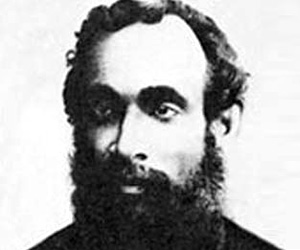
Sir Surendranath Banerjee

Sir Surendranath BanerjeeBorn - 10 November 1848
Died - 6 August 1925
Achievements - Being among the earliest of Indian politicians in the pre-independence era, Sir Surendranath Banerjee established the Indian National Association that he later merged with the Indian National Congress owing to their common agenda. At a very young age, he cleared the British instituted ICS examinations, but was dismissed due to racial discrimination. He whipped up a strong protest against this.

Among the earliest Indian politicians during the British raj was Sir Surendranath Banerjee. He set up the Indian National Association that was among the earliest political organizations of that era. Later on, Banerjee became a senior member of the Indian National Congress. Born on 10 November 1848 at Calcutta in West Bengal, Surendranath Banerjee was intensely swayed by the liberal, progressive thinking of his father, Durga Charan Banerjee. Read on to know more about the biography of Sir Surendranath Banerjee.

After graduating from the University of Calcutta, Surendranath traveled to England in 1868 along with Romesh Chunder Dutt and Behari Lal Gupta to appear for the Indian Civil Service exams. Though he passed the ICS in 1869, he was dismissed because of a dispute over his right age. After this matter was sorted out in a court of law, Banerjee reappeared for the exam and once again managed to clear it in 1871. He was appointed as the assistant magistrate in Sylhet, but was chucked out due to racial discrimination.

Not one to leave challenges lying down his entire life history, Sir Surendranath Banerjee headed straight to England this time. Though he raised his voice against the injustice, his protest failed to deliver any positive result. However, during his stay in England from 1874 to 1875, Banerjee acquainted himself with the works of Edmund Burke and other liberal philosophers. Upon returning to India, Surendranath Banerjee instead started working as a professor of English at the Metropolitan Institution, the Free Church Institution and at the Ripon College.

In the time to come, Banerjee went on to launch 'The Bengali' newspaper and the Indian National Association in 1876. He employed these forums to address political and social issues like the age-limit for Indian students appearing for ICS. He rebuked the racial discrimination practiced by the British officers through public speeches all over the country, which made him very popular. After the Congress was set up in 1885 at Bombay, Banerjee merged his Indian National Association with it owing to their common agenda. He served as Congress President in 1898 and 1904.

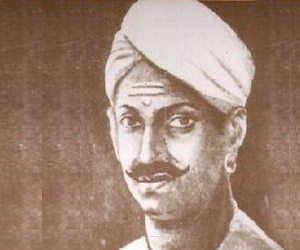
Mangal Pandey

Mangal PandeyBorn: 19 July 1827
Martyrdom: 8 April 1857
Achievements: A sepoy working under the British East India Company, Mangal Pandey's name got etched into the pages of the Indian history after he attacked his senior British officers in an incident, which is today remembered as the Sepoy Mutiny of 1857 or the India's First War of Independence. The reason behind this was the rumor that the cartridges used by Indian sepoys were greased with the fat of cow and pig.

Mangal Pandey, whose name is often preceded by Shaheed meaning a martyr in Hindi, was an Indian soldier during the pre-independence era. A member of the 34th Regiment of the Bengal native infantry of the East India Company, Mangal Pandey is counted among the most popular figures associated with India's freedom struggle in present times. He was born on 19 July 1827 in the Nagwa village in the Ballia district of the Uttar Pradesh state. There still exist families in this village who claim to the descendents of Mangal Pandey.

However, some disputes exist over the exact place where Mangal Pandey was born. So read on to know more about the biography of Mangal Pandey, who joined the sepoy force of the British East India Company in the year 1849 at the age of 22. His name got etched into the pages of the Indian history after he attacked his senior British officers in an incident, which is today called the Sepoy Mutiny of 1857 or the India's First War of Independence. Due to this, he was later captured and hung till death on 8 April in 1857.

Here's more about the life history of Mangal Pandey, who was a devout Hindu and practiced his religion strictly. It was rumored that the cartridge used in the Enfield P-53 rifle which was being used by the Indian sepoys was greased with the fat of pig and cow fat. These cartridges had to be bitten off in order to remove the cover prior use and this went against the religious beliefs of the Muslims and Hindus. The general opinion was that the Britishers had deliberately done this to hurt the sentiments of Indians. And this was the main reason behind the outburst of Pandey's anger.

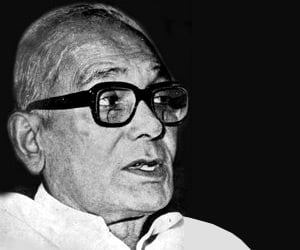
Jayprakash Narayan

Jayaprakash NarayanBorn - 11 October 1902
Died - 8 October 1979
Achievements - Jayaprakash Narayan was a freedom fighter and political leader of India. Popularly called JP, Narayan played a pivotal role in the Quit India movement and earned a lot of fame and respect for this. During the Quit India Movement too in 1942, JP was at the helm of the agitation.

Jayaprakash was an Indian freedom fighter and political leader of India. Popularly called JP by his allies, Narayan is remembered for spearheading the opposition to Indira Gandhi during the 1970s era. This biography traces out the political life history of Jayaprakash Narayan who was born in the Sitabdiara village in the Saran district of Bihar. Being a bright student, he went on to complete his BA and MA in politics and sociology from the United States in 1922.

Once in the United States, Jayaprakash Narayan studied the political science, sociology and economics at the Universities of Berkeley, Iowa, Wisconsin and Ohio State. He was really impressed by Marxism during his study at the University of Wisconsin at Madison. The ideas and writings of M.N. Roy also equally impressed him. But financial problems and his mother's health caused him to give up his dreams of securing a PhD.

It was while Narayan was returning to India that he got the chance to meet revolutionaries like Rajani Palme Dutt in London on his way back to India. As such, he joined the Indian National Congress in 1929 upon receiving an invitation from Pandit Jawaharlal Nehru. In the time to come, the great Mahatma Gandhi turned out to be the mentor and guide of Jayaprakash Narayan. Narayan was jailed and tortured by the British forces several times during the war for Independence.

Jayaprakash Narayan played a crucial role in the Quit India movement and earned a lot of fame and respect for this. JP wedded freedom fighter Prabhavati Devi, who was a follower of Kasturba Gandhi. She resided at the Sabarmati Ashram while Jayaprakash Narayan was studying abroad. Though she nurtured viewpoints that contradicted JP's, yet her husband always respected her independence.

Jayaprakash Narayan met Ram Manohar Lohia, Minoo Masani, Ashok Mehta, Yusuf Desai and other national leaders when he was put behind bars in 1932 because of the civil disobedience movement. After JP came out of jail, the Congress Socialist party was set up. While Acharya Narendra Deva was elected as its President, JP was chosen its general secretary. During the Quit India Movement in 1942, JP was again at the helm of the agitation.

Post independence and death of Gandhiji, Jayaprakash Narayan, Acharya Narendra Dev and Basawon Singh directed the CSP out of Congress to create the first opposition Socialist Party. This unit later on took the title Praja Socialist Party. Basawon Singh became the first leader of the Opposition in the state and assembly of Bihar, whereas Acharya Narendra Deva became the first leader of opposition in the state and assembly of U.P.

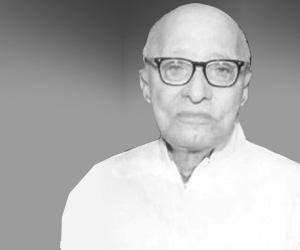
Chakravarthi Rajagopalachari

Chakravarthi RajagopalachariBorn - 10 December 1878
Died - 25 December 1972
Achievements - He was a very well-known lawyer, writer and statesman of India during the independence struggle. A prominent figure in the Indian National Congress, he was elected the second governor-general of India after its independence. Following this, Rajaji was made the chief minister of the Indian state of Madras.

Chakravarthi Rajagopalachari, who was more popular as Rajaji or C. Rajagopalachari, was a well-very known lawyer, writer and statesman of India. He was elected the second governor-general of India after its independence and following this, Rajaji was made the chief minister of the Indian state of Madras. Read on about the biography of C. Rajagopalachari, whose interest in politics started at inception of the 1900s. He was hugely impressed on meeting Congress extremist, Bal Gangadhar Tilak and even struck a good kinship with his follower, V. O. Chidambaram Pillai.

After Mahatma Gandhi returned from South Africa in 1919, Rajaji made up his mind to follow him. C. Rajagopalachari was appointed the general-secretary of the Congress in 1921 and thus, got opportunity to gain acquaintance with other leaders like Jawaharlal Nehru, Vallabhbhai Patel, Maulana Azad, Rajendra Prasad et al. Rajaji steadily rose in rank and even came to be regarded as Gandhiji's successor. He shared close kinship with Jawaharlal Nehru and Sardar Patel too, despite the difference in their viewpoints. Rajaji developed differences with Nehru later, but still both respected one another tremendously.

Being among the five most important leaders in the Indian National Congress, C. Rajagopalachari played a pivotal role in the life history of this party. Rajaji was the member of its Working Committee from 1919 to 1942 and then again from time period 1950 to 1955. Though Rajaji was active in Congress for about half a century, he was not elected its president even once. In the year 1932, however, he was chosen as the acting president of the Congress and played crucial role in formulating the Poona Pact with Ambedkar. Later when he was asked by Gandhiji and Nehru to head the Congress a couple of times, he refused.

Possibly, Rajaji was amongst the initial Congress leaders during 1940s to accept the right of Muslims to self-determination. He even worked out a solution by which there could be common defense and communications between the two nations. But this idea was discarded by Ali Jinnah and also some Congress leaders. Rajaji was always known to be a staunch protector of his political principles and never hesitated to disagree with his closest allies even in front of the public.