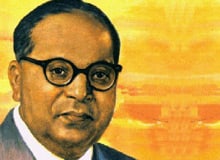
Dr. B.R. Ambedkar

Dr. B. R. AmbedkarBorn: 14 April, 1891
Passed Away: 6, December, 1956

Contribution
Dr B R Ambedkar, popularly known as Babasaheb Ambedkar, was one of the architects of the Indian Constitution. He was a well-known politician and an eminent jurist. Ambedkar's efforts to eradicate the social evils like untouchablity and caste restrictions were remarkable. The leader, throughout his life, fought for the rights of the dalits and other socially backward classes. Ambedkar was appointed as the nation's first Law Minister in the Cabinet of Jawaharlal Nehru. He was posthumously awarded the Bharat Ratna, India's highest civilian honor in 1990.

His Life
Bhimrao Ambedkar was born to Bhimabai Sakpal and Ramji on 14 April 1891 in Madhya Pradesh. He was the fourteenth child of his parents. Ambedkar;s father was a Subedar in the Indian Army and posted at Mhow cantonment, MP. After the retirement of his father in 1894, the family moved to satara. Shortly after, his mother passed away. Four years later, his father remarried and the family shifted to Bombay, where he cleared his matriculation in 1908. His father Bhimabai Sakpal died in Bombay, in 1912.

Ambedkar was a victim of caste discrimination. His parents hailed from the Hindu Mahar caste, which was viewed as "untouchable" by the upper class. Due to this, Ambedkar had to face severe discriminations from every corners of the society. a The discrimination and humiliation haunted Ambedkar even at the Army school, run by British government. Fearing social outcry, the teachers would segregate the students of lower class from that of Brahmins and other upper classes. The untouchable students were often asked by the teacher to sit outside the class. After shifting to Satara, he was admitted to a local school but the change of school did not change the fate of young Bhimrao. Discriminationfollowed wherever he went. In 1908, Ambedkar got the opportunity to study at the Elphinstone College. Besides clearing all the exams successfully Ambedkar also obtained a scholarship of twenty five rupees a month from the Gayakwad ruler of Baroda, Sahyaji Rao III. Political Science and Economics were the subjects in which he graduated from the Bombay University in 1912. Ambedkar decided to use the money for higher studies in the USA.

After coming back from the US, Ambedkar was appointed as the Defence secretary to the King of Baroda. Even, there also he had to face the humiliation for being an 'Untouchable'. With the help of the former Bombay Governor Lord Sydenham, Ambedkar obtained the job as a professor of political economy at the Sydenham College of Commerce and Economics in Bombay. In order to continue his further studies, in 1920 he went to England at his own expenses. There he was awarded honor of D.Sc by the London University. Ambedkar also spent few months at the University of Bonn, Germany, to study economics. On 8 June, 1927, he was awarded a Doctorate by the University of Columbia.

Dalit Movement
After returning to India, Bhimrao Ambedkar decided to fight against the caste discrimination that almost fragmented the nation. Ambedkar opined that there should be separate electoral system for the Untouchables and lower caste people. He also favored the concept of providing reservations for Dalits and other religious communities.

Ambedkar began to find ways to reach to the people and make them understand the drawbacks of the prevailing social evils. He launched a newspaper called "Mooknayaka" (leader of the silent). It was believed that, one day, after hearing his speech at a rally, Shahu IV, an influential ruler of Kolhapur dined with the leader. The incident also created a huge uproar in the socio-political arena of the country.

Political career
In 1936, Ambedkar founded the Independent Labor Party. In the 1937 elections to the Central Legislative Assembly his party won 15 seats. Ambedkar oversaw the transformation of his political party into the All India Scheduled Castes Federation, although it performed poorly in the elections held in 1946 for the Constituent Assembly of India.

Ambedkar objected to the decision of Congress and Mahatma Gandhi to call the untouchable community as Harijans. He would say that even the members of untouchable community are same as the other members of the society. Ambedkar was appointed on the Defence Advisory Committee and the Viceroy's Executive Council as Minister for Labor. His reputation as a scholar led to his appointment as free India's first, Law Minister and chairman of the committee responsible to draft a constitution.

Framer of Constitution
Bhimrao Ambedkar was appointed as the chairman of the constitution drafting committee. He was also a noted scholar and eminent jurist. Ambedkar emphasized on the construction of a virtual bridge between the classes of the society. According to him, it would be difficult to maintain the unity of the country if the difference among the classes were not met.

Conversion to Buddhism
In 1950, Ambedkar traveled to Sri Lanka to attend a convention of Buddhist scholars and monks. After his return he decided to write a book on Buddhism and soon, converted himself to Buddhism. In his speeches, Ambedkar lambasted the Hindu rituals and caste division. Ambedkar founded the Bharatiya Bauddha Mahasabha In 1955. His book "The Buddha and His Dhamma" was published posthumously.

On October 14, 1956 Ambedkar organized a public ceremony to convert around five lakh of his supporters into Buddhism. Ambedkar traveled to Kathmandu to attend the Fourth World Buddhist Conference. He completed his final manuscript, "The Buddha or Karl Marx" on December 2, 1956.

Death
Since 1954-55 Ambedkar was suffering from serious health problems including diabetes and weak eyesight. On 6 December, 1956 he died at his home in Delhi. Since, Ambedkar adopted the Buddhism as his religion, a Buddhist-style cremation was organized for him. The ceremony was attended by hundreds of thousands of supporters, activists and admirers.

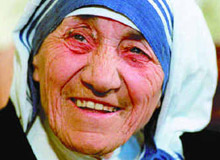
Mother Teresa

Mother TeresaBorn: August 26, 1910
Passed Away: 5 September, 1997

Contributions
Mother Teresa was a true follower of humanity. Many people considered Mother as the "reincarnated form of Lord Jesus". Mother Teresa devoted her entire life in serving the needy and abandoned people of the society. Although her mission started in India, she succeeded in bringing the people of all societies under one roof, i.e. humanity. Besides the Nobel Peace Prize, she was also awarded with Ramon Magsaysay and Padmashri Award for her social works.

Life
The original name of Mother Teresa was Agnes Gonxha Bojaxhiu. She was born in Skopje, the capital of Macedonia, on 26 August, 1910. In 1919, when she was eight years old, Agnes lost her father, a noted politician in Albania. At the age of twelve, she felt strongly the "call of God" and wanted to spread the love of Christ. Her religious foundation developed further and in 1928, she left Skopje to join the Institute of the Blessed Virgin Mary, Ireland. The institution was popularly known as Sisters of Loreto. There, she received the name Sister Mary Teresa. After a training of around six months in Dublin, the capital of Ireland, Teresa was sent to India. On 24 May, 1931 she took her initial vows as a nun.

For around next 15 years, Mother Teresa taught at St. Mary's High School in Calcutta, now Kolkata. She also became the principal of the school. On 10 September, 1946, while traveling to Darjeeling, North-Bengal, for the annual retreat Mother realized "the call within call". She felt as if the Jesus was asking her to come out of the walls and serve the down-trodden people. The feeling was so intense that on 17 August, 1947, Mother dressed in white, blue bordered sari left the Convent. In December 1950, Mother for the first time visited the slums of Calcutta. Although she had no funds, she started an open-air school for slum children. Soon she was joined by many voluntary organizations, which provided Mother, a crucial financial support.

Later, on 7 October, 1950, Mother established the Missionaries of Charity in Calcutta. The primary objective of the Missionaries of Charity was to love and care for weak and downtrodden persons in the society. In 1965, the Pope Paul VI granted a Decree of Praise and allowed Mother Teresa to expand her congregation to other countries. Now, the Society became an International Religious Family. Following the decree, the society opened its branches in many countries of the world including some influential erstwhile communist nations.

To strengthen the organization and spread the message of international brotherhood, Mother Teresa opened a few more organisations. She founded the Missionaries of Charity for brothers in 1963, Contemplative Branch of Sisters in 1976 and Contemplative Branch of Brothers in 1979, subsequently.

Missionaries of Charity
The Missionaries of Charity was formed by Mother Teresa in 1950. Today, it consists of over 4,000 nuns. The organization, so far, has expanded its wings to over 100 countries. The objective of the Missionaries of Charity is to provide care and support to the sick, mentally ill, aged, victims of incorrigible diseases, and abandoned children. The Missionaries of Charity has opened around 20 homes in Calcutta including a school for street children.

Awards
People from across the globe have appreciated the work and dedication of Mother Teresa. She received numerous awards including the Nobel Peace Prize (1991), Ramon Magsaysay Award and Padmashri Award (1962). The honor and appreciation, Mother Teresa received could not be measured in terms of awards and prizes. The real awards came from the people she served and worked with.

Her Last Days
After 1980, Mother suffered some serious health problems including two cardiac arrests. Despite the problems, Mother herself governed the Missionaries of Charity and its branches, as efficiently as earlier. In April 1996, Mother Teresa fell and broke her collar bone. Since then, Mother's health started declining. On September 5, 1997, Mother Teresa passed away.

Beatification
In 2002, Pope John Paul II confirmed the decrees to Mother's canonization. On 19 October, 2003 the Pope beatified the Mother before a huge crowd at St. Peter's square, Vatican City.

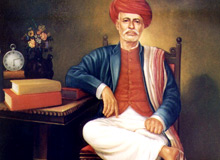
Shri Jyotiba Phule

Jyotiba PhuleBorn: 11 April, 1827
Passed Away: 28 November, 1890

Contributions
Jyotiba Phule was one of the prominent social reformers of the nineteenth century India. He led the movement against the prevailing caste-restrictions in India. He revolted against the domination of the Brahmins and for the rights of peasants and other low-caste fellow. Jyotiba Phule was believed to be the first Hindu to start an orphanage for the unfortunate children.

Life
Jyotirao Phule was born in Satara district of Maharastra in 1827. His father, Govindrao was a vegetable-vendor at Poona. Originally Jyotirao's family belonged to 'mali' caste, considered as inferior by the Brahmins. Since, Jyotirao's father and uncles served as florists, the family came to be known as `Phule'. Jyotirao's mother passed away when he was nine months old.

Jyotirao was an intelligent boy but due to the poor financial condition at home, he had to stop his studies at an early age. He started helping his father by working on the family's farm. Recognising the talent of the child prodigy, few months later, a neighbor persuaded his father to send him to school. In 1841, Jyotirao got admission in the Scottish Mission's High School, Poona. There, he met Sadashiv Ballal Govande, a Brahmin, who remained his close friend throughout his life. Jyotirao was married to Savitribai, when he was thirteen years old.

Movement
In 1848, an incident took place in his life that later sparked off the dalit-revolution in the Indian society. Jyotirao was invited to attend a wedding of one of his Brahmin friends. Knowing that he belonged to inferior caste, the relatives of the bridegroom insulted and abused him. Jyotirao left the procession and made up his mind to defy the prevailing caste-system and social restrictions. He then started his campaign of serving the people of lower caste who were deprived of all their rights as human beings.

After reading Thomas Paine's famous book 'The Rights of Man', Jyotirao was greatly influenced by his ideas. He believed that enlightenment of the women and lower caste people was the only solution to combat the social evils. Therefore, in 1848, he along with his wife started a school for the girls.

The orthodox Brahmins of the society were furious at the activities of Jyotirao. They blamed him for vitiating the norms and regulations of the society. Many accused him of acting on behalf of the Christian Missionaries. But Jyotirao was firm and decided to continue the movement. Interestingly, Jyotirao had some Brahmin friends who extended their support to make the movement successful.

Jyotirao attacked the orthodox Brahmins and other upper castes and termed them as "hypocrites". He campaigned against the authoritarianism of the upper caste people. He urged the "peasants" and "proletariat" to defy the restrictions imposed upon them.

In 1851, Jyotiba established a girls' school and asked his wife to teach the girls in the school. Jyotirao, later, opened two more schools for the girls and an indigenous school for the lower castes, especially the Mahars and Mangs.

Viewing the pathetic condition of widows and unfortunate children Jyotirao decided the open an orphanage. In order to protect those widows and their children, Jyotiba Phule established an orphanage in 1854. Many young widows, from the upper-caste spent their days in the orphanage.

Satya Shodhak Samaj
After tracing the history of the Brahmin domination in India, Jyotirao blamed the Brahmins for framing the weird and inhuman laws. He concluded that the laws were made to suppress the "shudras" and rule over them. In 1873, Jyotiba Phule formed the Satya Shodhak Samaj (Society of Seekers of Truth). The purpose of the organization was to liberate the people of lower-castes from the suppression of the Brahmins. The membership was open to all and the available evidence proves that some Jews were admitted as members. In 1876 there were 316 members of the 'Satya Shodhak Samaj'. In 1868, in order to give the lower-caste people more powers Jyotirao decided to construct a common bathing tank outside his house. He also wished to dine with all, regardless of their caste.

Death
Jyotiba Phule devoted his entire life for the liberation of untouchables from the exploitation of Brahmins. He revolted against the tyranny of the upper castes. On 28 November, 1890, the great reformer of India, Mahatma Jyotirao Phule, passed away.

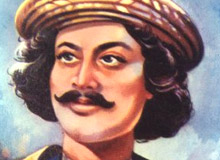
Raja Ram Mohan Roy

Raja Ram Mohan RoyBorn: August 14, 1774
Died: September 27, 1833

Achievements
Raja Ram Mohan Roy is considered as the pioneer of modern Indian Renaissance for the remarkable reforms he brought in the 18th century India. Among his efforts, the abolition of the sati-pratha-a practice in which the widow was compelled to sacrifice herself on the funeral pyre of her husband-was the prominent. His efforts were also instrumental in eradicating the purdah system and child marriage. In 1828, Ram Mohan Roy formed the Brahmo Samaj, a group of people, who had no faith in idol-worship and were against the caste restrictions. The title 'Raja' was awarded to him by Mughal emperor Akbar, the second in 1831 when Roy visited England as an ambassador of the King to ensure that Bentick's regulation of banning the practice of Sati was not overturned.

Background
Raja Ram Mohan Roy was born on 14 August, 1774 to Ramakanta Roy and Tarini Devi in Murshidabad district, West Bengal. His father was a wealthy Brahmin and strictly performed the duties set by the religion. Ram Mohan himself was also devoted to lord Vishnu and in his 14th year, he wanted to become a monk but his mother, Tarini Devi objected to his desire.

Though his father Ramakanto was very orthodox but he wanted his son to have higher education and after the basic formal education in Sanskrit and Bengali in the village school, Ram Mohan was sent to Patna to study Persian and Arabic in a madrasa. After that he went to Benares (Kashi) for learning the intricacies of Sanskrit and Hindu scripture, including the Vedas and Upanishads. He learnt English language at the age of 22 years.

Father of Renaissance
Ram Mohan viewed education as a medium to implement the social reforms. So, in 1815, Ram Mohan came to Calcutta and the very next year, started an English College by putting his own savings. He was well aware that the students should learn the English language and scientific subjects and that's why he criticized the government's policy of opening only Sanskrit schools. According to him, Indians would lag behind if they do not get to study modern subjects like Mathematics, Geography and Latin. Government accepted this idea of Ram Mohan and also implemented it but not before his death. Ram Mohan was also the first to give importance to the development of the mother tongue. His 'Gaudiya Byakaran' in Bengali is the best of his prose works. Rabindranath Tagore and Bankimchandra also followed the footsteps of Ram Mohan Roy.

Freedom of Press
Ram Mohan Roy was a staunch supporter of free speech and expression and fought for the rights of vernacular press. He also brought out a newspaper in Persian called 'Miratul- Akhbar' (the Mirror of News) and a Bengali weekly called 'Sambad Kaumudi' (the Moon of Intelligence). In those days, items of news and articles had to be approved by the government before being published. Ram Mohan protested against this control by arguing that newspapers should be free and that the truth should not be suppressed simply because the government did not like it.

His Last Days
Raja Ram Mohan Roy, during his visit to United Kingdom as an ambassador of Akbar- the second, died of meningitis at Stapleton in Bristol on 27 September, 1833. He went there to request the British government to increase the royalty, received by the Mughal Emperor and to ensure that Lord Bentick's regulation of banning the practice of Sati was not overturned. Recently, the British government has named a street as 'Raja Rammohan Way' in the memory of Raja Ram Mohan Roy.

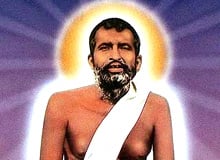
Swami Ramkrishna Paramhans

Sri Ramakrishna Paramhansa Born: February 18, 1836
Passed Away: 16, August, 1886

Contributions
Sri Ramakrishna Paramhansa was a popular saint of India. He had a strong faith in the existence of god. He regarded every woman of the society, including his wife, Sarada, as holy mother. Swami Vivekananda was one of the prominent disciples of Ramakrishna, who later formed the Ramakrishna Mission.

Life
The original name of Ramakrishna Paramhansa was Gadadhar Chattopadhyay. He was born into a poor and orthodox Brahmin family on 18 February, 1836 in Kamarpukur, Hooghly district of West Bengal. His parents were Khudiram Chattopadhyaya, and Chandramani Devi.

Though Gadadhar was very reluctant going to school, he had a god-gifted ability of painting and creating clay models. He was also good at learning things. He easily mastered the tales, based upon the religion. Young Gadadhar loved the nature so much that he used to spend much of his time in orchards and on the river-banks.

After the death of his father in 1843, the responsibilities of the family were handled by his elder brother Ramkumar. Ramkumar left home for Calcutta and started teaching Sanskrit in a local school. Ramkumar also served as a priest at different socio-religious functions. Young Gadadhar, back in his village started performing regular worshipping of their family-deity.

Ramkrishna at Dakshineswar
Few months later, Ramkumar was invited to Dakshineswar temple by Rani Rasmoni, the founder of the temple. Ramkumar was appointed as the chief-priest of the temple. In 1852, Ramakrishna went to Calcutta and started assisting his brother at the same temple.

In 1856, after the death of Ramkumar, Ramakrishna took his place as the chief-priest of the Kali temple. It is believed that the name Ramakrishna was given to Gadadhar by the son-in-law of Rani Rasmoni.

After being given more responsibilities, Ramkrishna began to spend much time in the "Thakur-Ghar" (home of the deity). He considered Goddess Kali as the mother of all. He wanted to see the glimpse of the god. At times, he would go into the jungle and spend the entire night worshipping goddess Kali. The activities of Ramakrishna were viewed by many as gimmick. Many believed that Ramakrishna has become "mad". With an effort to bring Ramakrishna back into the normal life, her mother began to search for a bride. In 1959, Ramakrishna was married to five year old Sarada.

Sri Ramakrishna was the most 'rational mystic'. With scientific precision he put forward in most simple terms, as parables and stories, the eternal truth regarding God and God realization. He talked about God only after directly experiencing the reality of God. To get rid of the thought that he belonged to a higher brahmanical caste, he began to eat food cooked by the shudras or lower-caste.

Sarada Devi, Ramakrishna's wife
At the age of eighteen, Sarada, the bride of the Ramakrishna, was sent to Dakshineshwar to join her husband. It was believed that the Ramakrishna regarded Sarada as the holy mother. Sarada Devi is considered as the first disciple of Ramakrishna. Even after Ramakrishna's death in 1886, Sarada Devi led the movement and worked hard to make it a success.

With Vivekananda
Ramakrishna met Vivekananda for the first time in November 1881 when Vivekananda visited Dakshineswar to know if the god really exists. In his reply Ramakrishna said, "Yes, I see God, just as I see you here, only in a much intenser sense. God can be realized,"

At first Vivekananda did not believe Ramakrishna. He felt, how such a simple man could see the God. But, gradually he started developing faith in Ramkrishna. Few days later, Vivekananda realized that Ramakrishna's words were honest and uttered from a deep experience. Vivekananda started visiting Dakshineswar frequently and a relationship of "Master and disciple" developed between the two.

At Death-Bed
In 1885 Ramakrishna suffered from throat cancer. In order to consult the best physicians of Calcutta, Ramakrishna was shifted to Shyampukur by his disciples. But with the time, his health started deteriorating and he was taken to a large house at Cossipore. His condition worsened and on 16 August, 1886, he expired at the Cossipore garden house. After the death of Ramakrishna, the monastic disciples formed a fellowship at a half-ruined house at Baranagar, headed by Vivekananda. This was the initial stage of Ramakrishna Mission.